MOTHERSHIP


Tracing the arrival of the Moon from a distant galaxy into our solar system, the thesis expands on Sun Ra’s work and the Zambian afronaut Edward Mukuka Nkoloso’s provocations by utilizing the Moon as a site to reimagine new politics and ways of living for humans, particularly Black populations. By projecting the experience of Blackness on this site, the thesis takes advantage of the Moon’s otherworldliness to imagine new futures for Black people while still rooting these experiences in the realities of being Black on Earth. Architecture is designed from the scale of the spacesuit to a spaceship by merging elements from Nigerian cultures, namely Efik and Yoruba societies, with science fiction. The clothing and architecture of communities in environments considered hostile to human habitation on Earth provide analogous areas of study for this work.
Institution
Harvard University Graduate School of Design
Project
Graduate Thesis
Advisors
Lisa Haber-Thomson, Helen Han, and Mack Scogin
Date
Spring 2022
THE BIRTH OF THE MOON
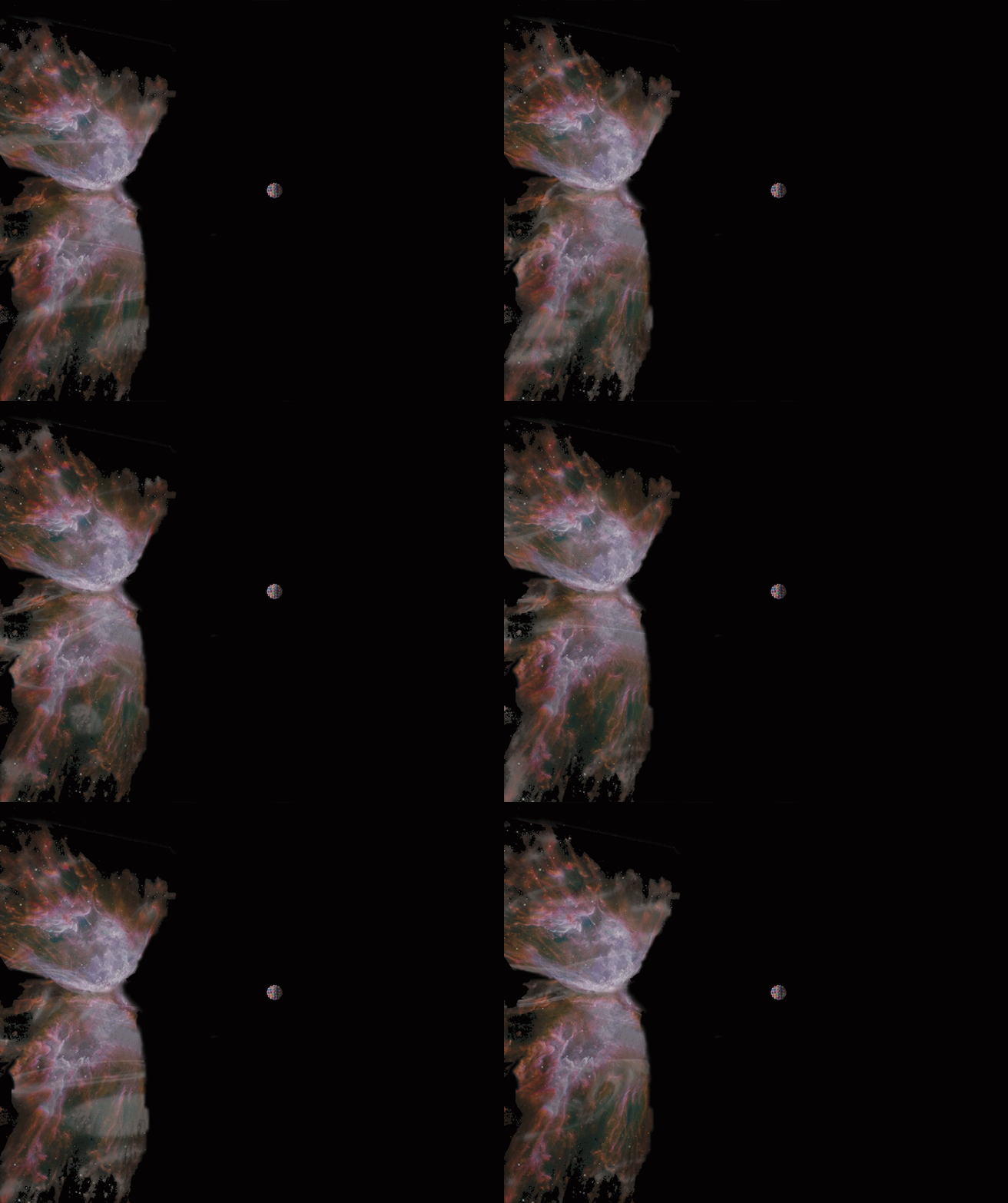
Fleeing the collapse of a dying star, a mothership traveled across galaxies looking for a place to release her eggs.
As they passed Earth, one egg became curious about this planet. In all their travels, they had never seen so much liquid water and lush green plants.
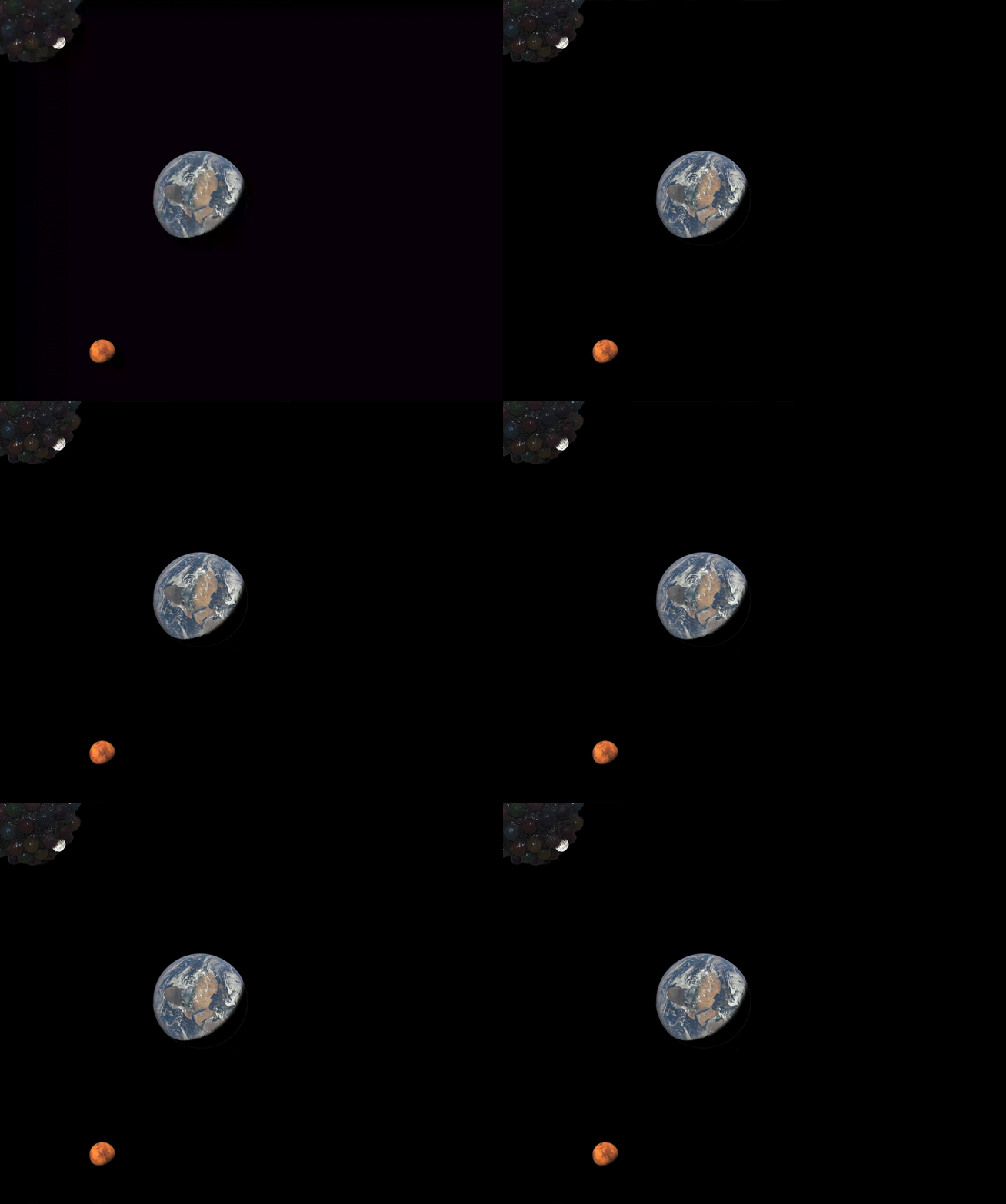
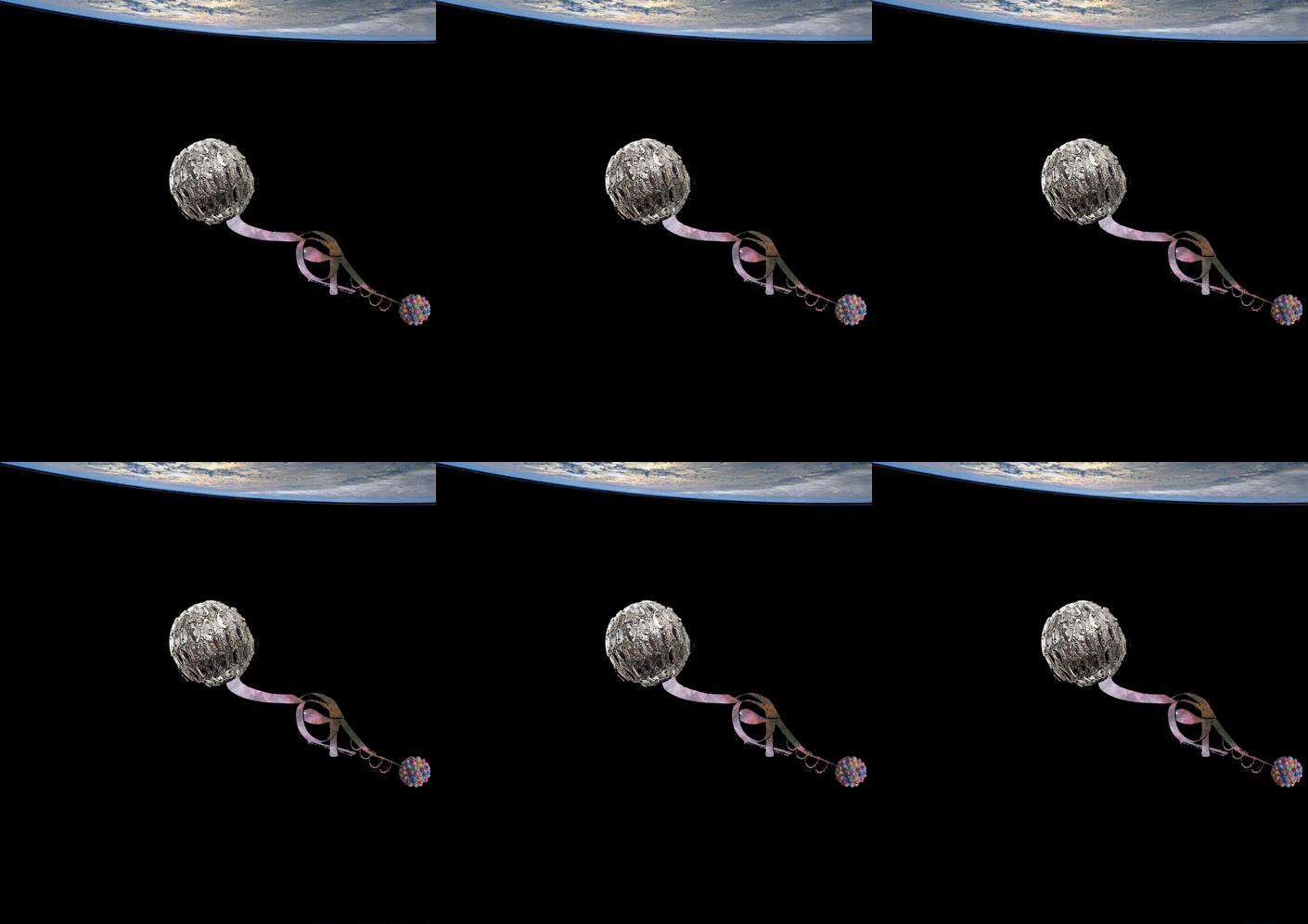
Ignoring warnings from the mothership and the other eggs, the curious egg leaned in to this strange planet and suddenly felt themselves getting drawn closer.
Confused by the creatures moving across its surface, the egg leaned closer to get a better look. As they pulled away from the mothership, they felt their rootcord get tauter and tauter.
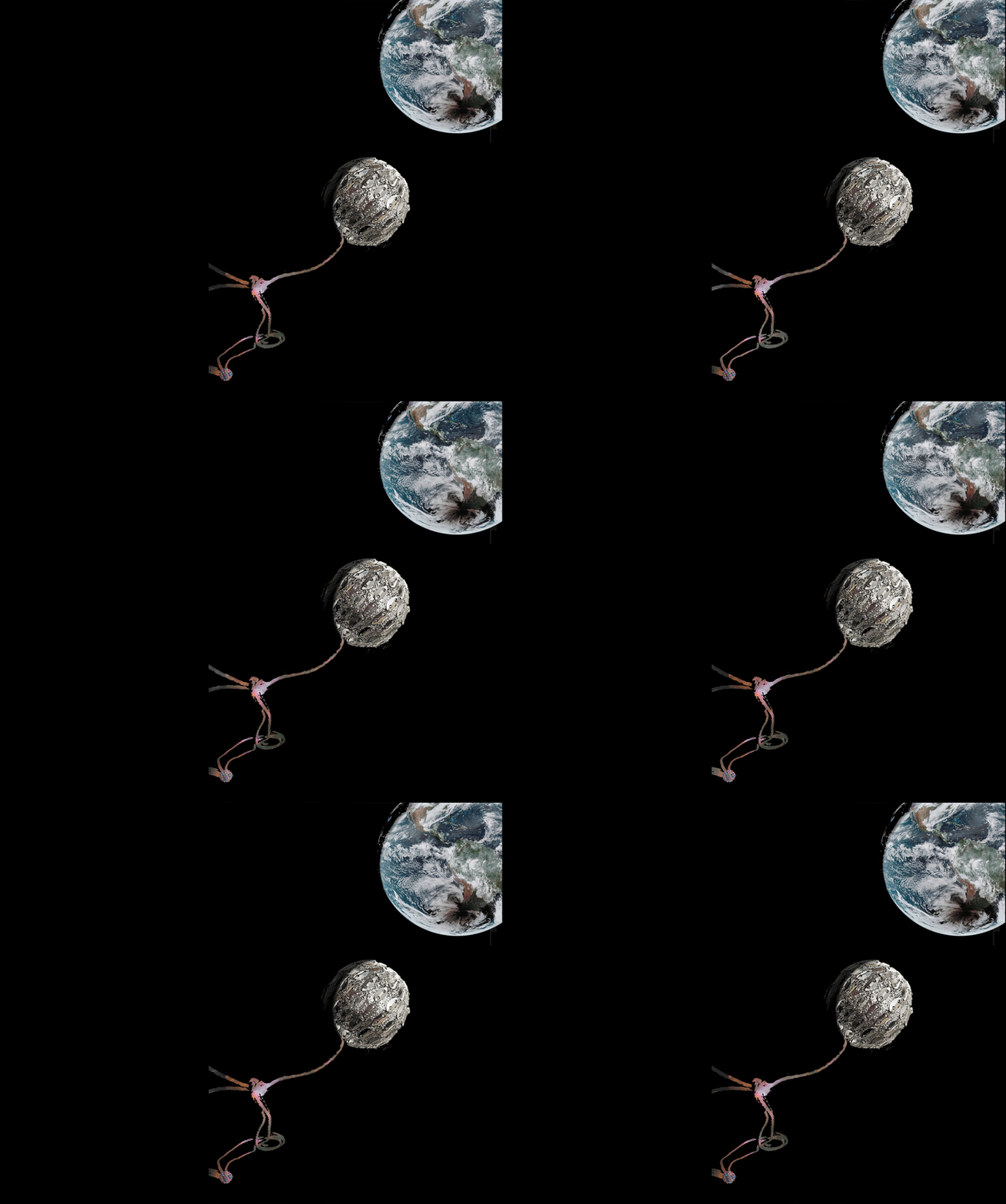

The egg tried to pull away from Earth, but their attempts were futile. They strained and strained, but the more they strained, the more they were pulled in.
Suddenly, they felt a snap! And the rootcord between the mothership and the egg was broken. The egg cried for their mothership and siblings, but they were already out of sight.
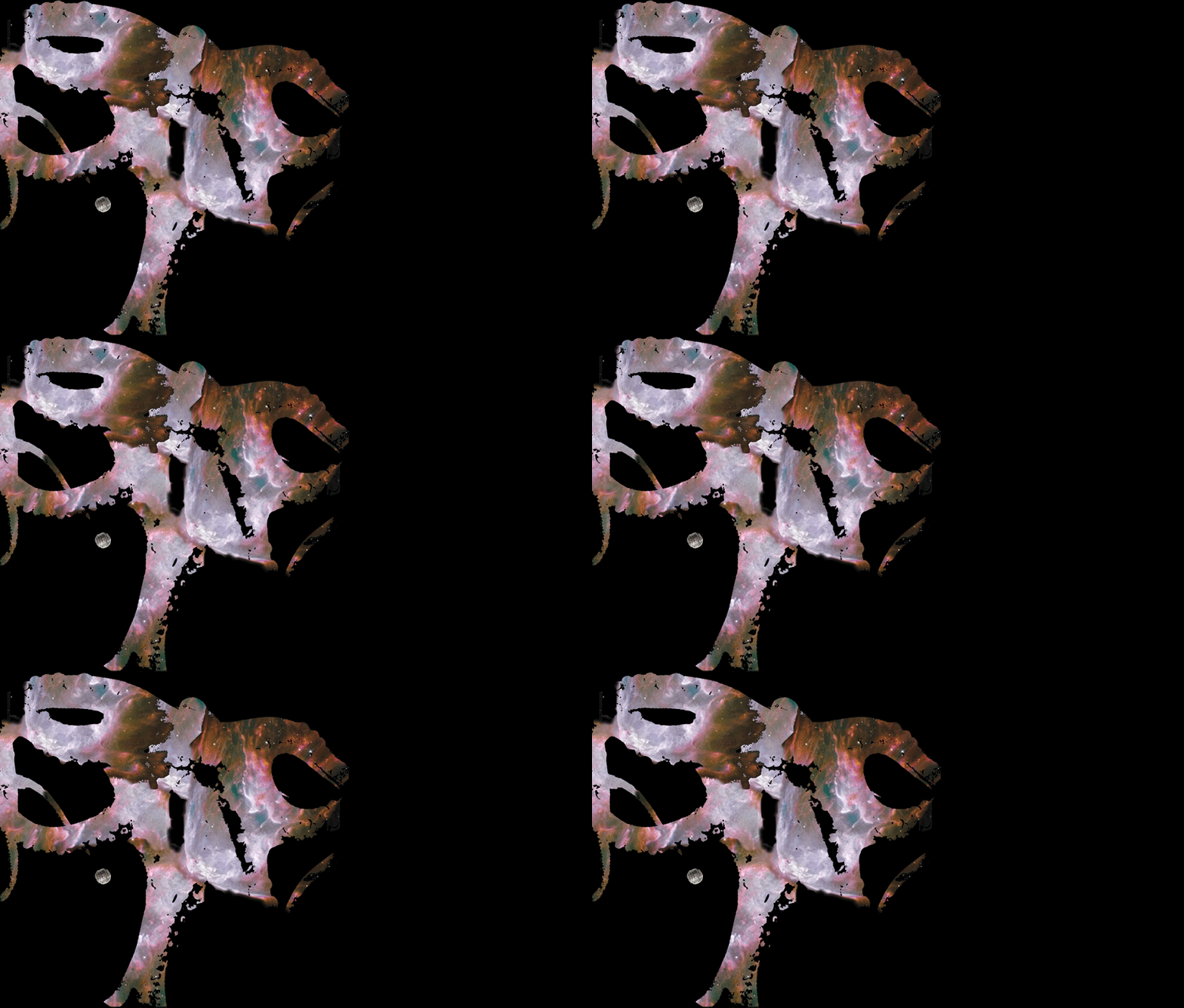
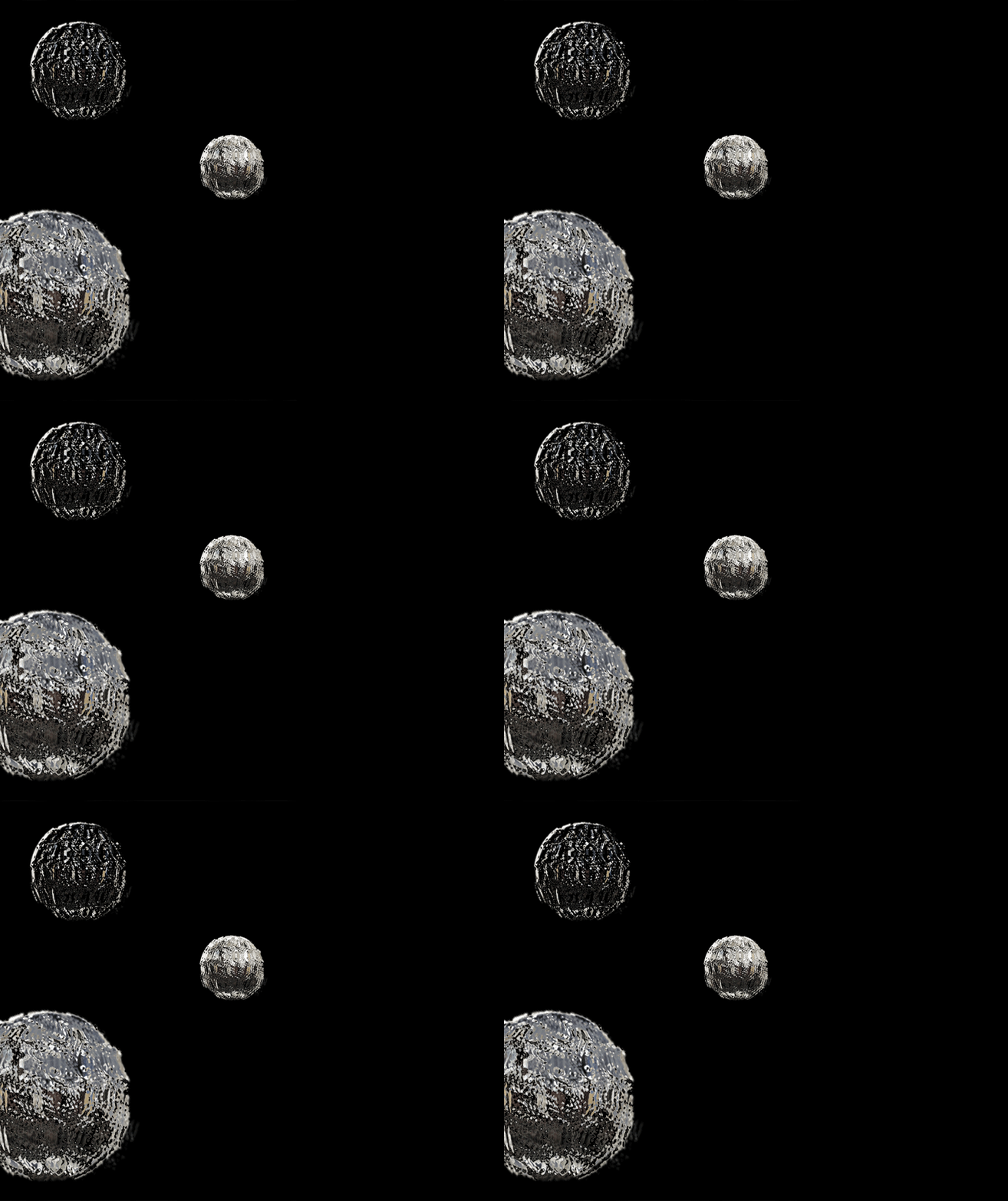
The egg continues to call out into space hoping that their voice will reach into the depths of the void and the mothership will return for them.
Only the Earth’s water hears the egg. But every time it reaches out to comfort them, the Earth pulls it down.

THE MOTHERSHIP AND A DISPLACED PEOPLE

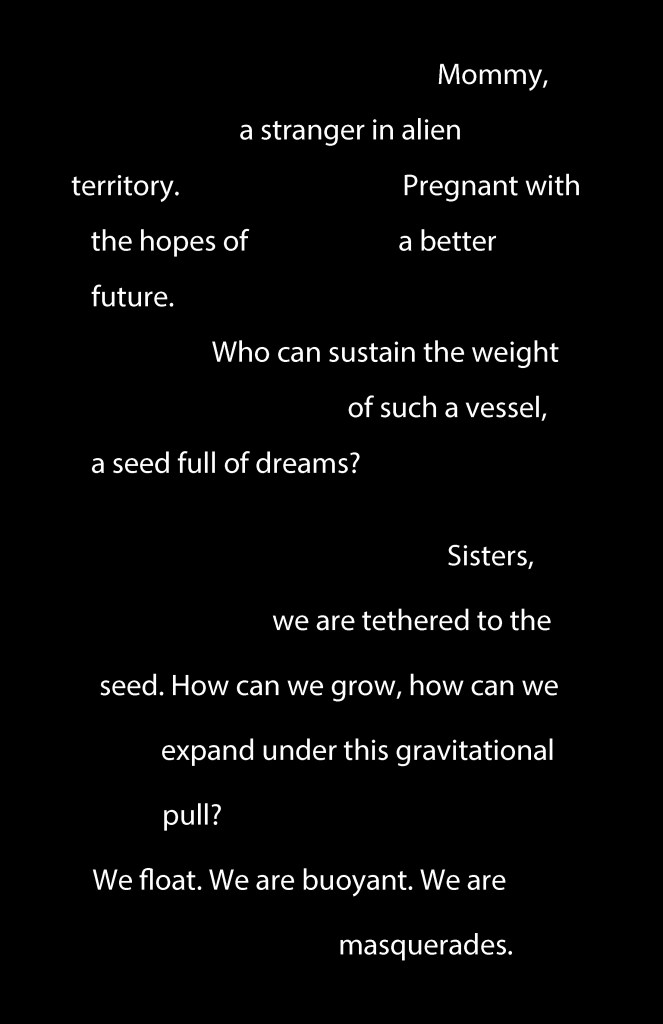
The thesis continues to ask:
What are the parameters of home?
How do we define and package these boundaries when we must uproot ourselves and travel to unfamiliar territory?
A NEW SPACESUIT
The spacesuits in the project are motivated by two styles of dress reserved for special occasions: gele, elaborate headgear made of cloth folded in various styles, and aso oke, a Yoruba fabric sewn into custom styles.
Gele is a cotton or silk fabric interwoven with metallic lurex fibers that provide it with a semi-rigid structure and reflective appearance. Aso oke has two meanings, both that speak to the relationship between the fabric, the body, and the environment in which it is produced or worn:
- Cloth made from the Yoruba people residing in northern regions of Nigeria.
- High (or top) clothing [a literal translation].
Gele and aso oke are empyrean and have transformative abilities. They have the capabilities to become part of a vessel that carries those who are leaving Earth and bring them safely to their new planet. They function on the scale of the body to protect the wearer in their new environment. Gele and aso oke are made for heavenly bodies.
ORIKI, AFROFUTURISM, AND SPACE EXPLORATION
The thesis is the oriki of Earth’s moon.
The thesis is the oriki of the Moon.
The thesis is the oriki of the only natural satellite orbiting Earth.
The thesis is the oriki of the reflective celestial body that is tethered to Earth due to its gravitational pull.
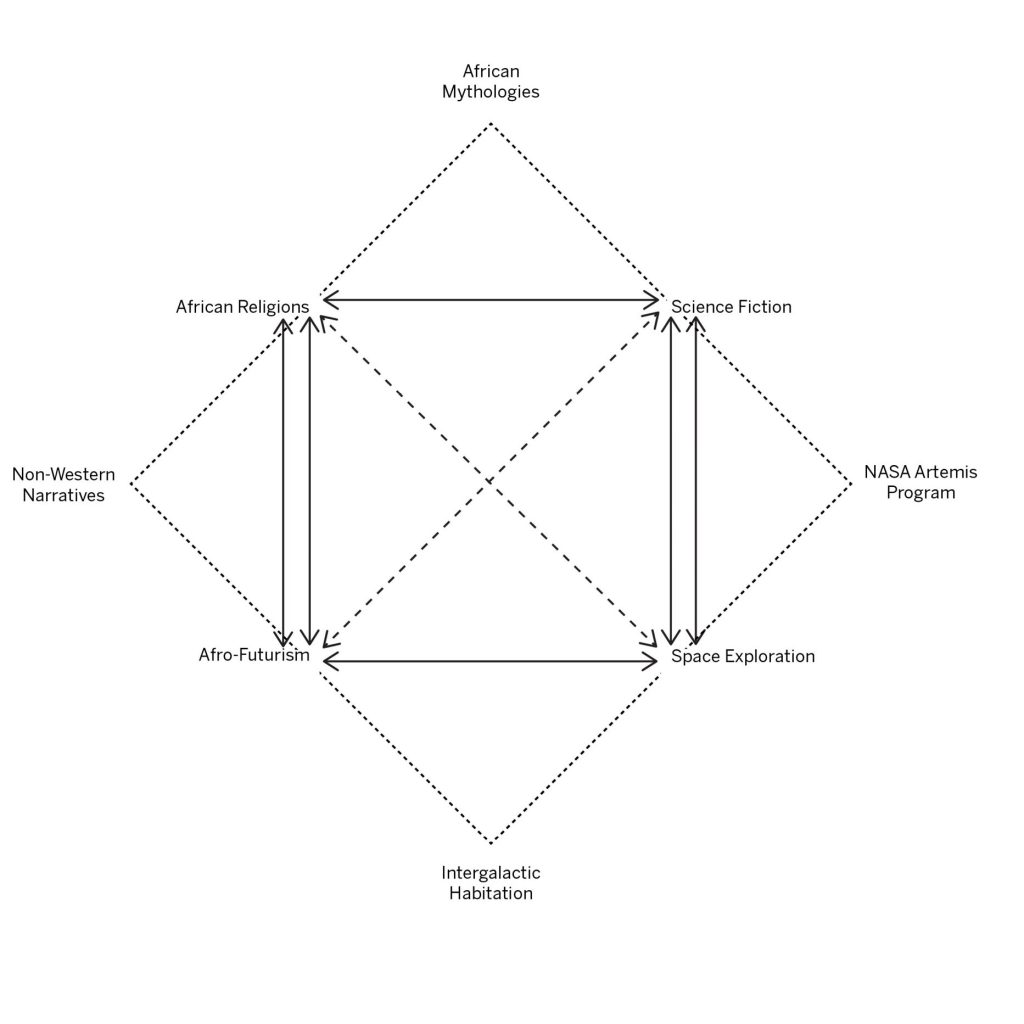
The thesis exists at the intersection of Afro-futurism, African religions, the origins of space exploration, and current international space programs. The particular narrative employed to tell the story of the moon is called an oriki. Oriki is a word originating in the Yoruba tradition and is defined as the verbal, visual, or performed evocation of the essence or origin of its subject.
According to Yoruba art historian Rowland Abiodun, “To know the oriki of a person is to be intimately familiar with [their] place in society and to know the oriki of the subject or an artifact is to know how it came to be.”1 The story of the Mothership is the oriki of Earth’s Moon. The Moon is forever tethered to earthly existence but has only been known to most from a distance. The oriki of the Moon is tied to humanity’s history of liberation and technological advancement and is constantly straddling the line between myth and reality.
1Abiodun, R. (2014). Yoruba Art and Language: Seeking the African in African Art. In R. Abiodun (Author), Yoruba Art and Language: Seeking the African in African Art (p. 12). Cambridge: Cambridge University Press.
 Tara Oluwafemi