
RETAIL THERAPY
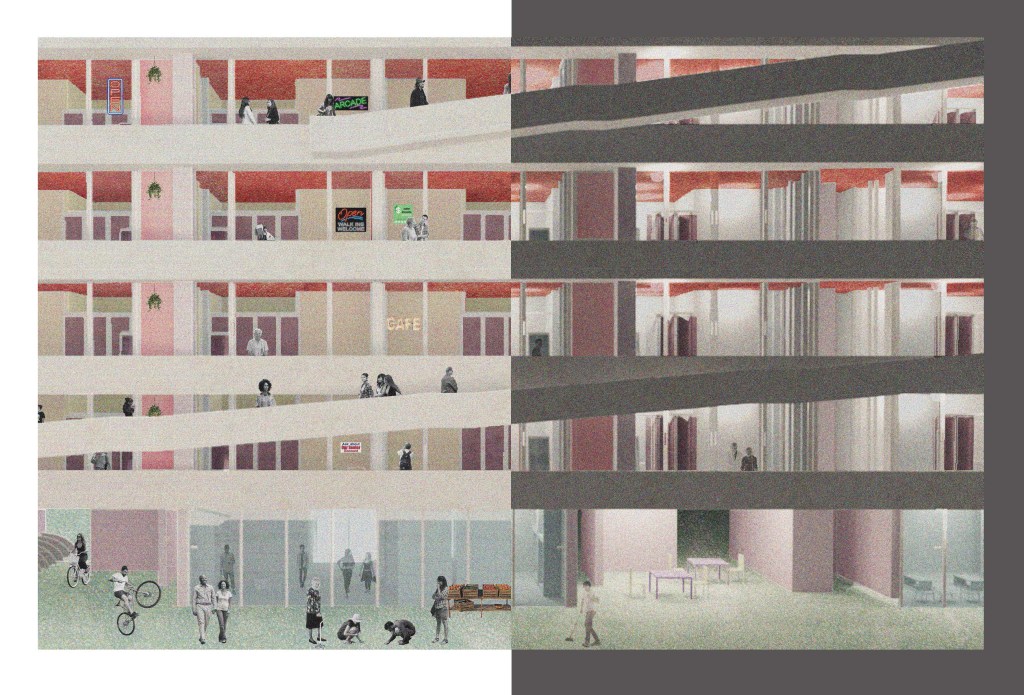
This project addresses the near future of collective housing for the elderly looking forward to the year 2050 through the lens of the forecasted explosion of the elderly population and the ongoing loneliness epidemic. Additionally, the project anticipates that in 2050 commerce will be an increasingly digital experience, and traditional malls and brick-and-mortar stores will continue to decline. The proposal adapts the model of retirement/65+ communities with the structural form and social qualities of the mall—foregoing normative definitions of retail—to create a self-motivated and informal pop-up shop experience. Community members can share their trades, skills, and goods with one another and the general public to increase engagement with and further socialize the elderly. Based in Stony Brook, Massachusetts, this design aims to combat social isolation and loneliness among elderly demographics, while supporting and increasing accessibility to community services and local businesses.
Institution
Harvard University Graduate School of Design
Project
Elderly Housing
Instructor
Jenny French
Collaborator
Desmond Liu
Date
Spring 2020
SHOPHOUSE TYPOLOGY
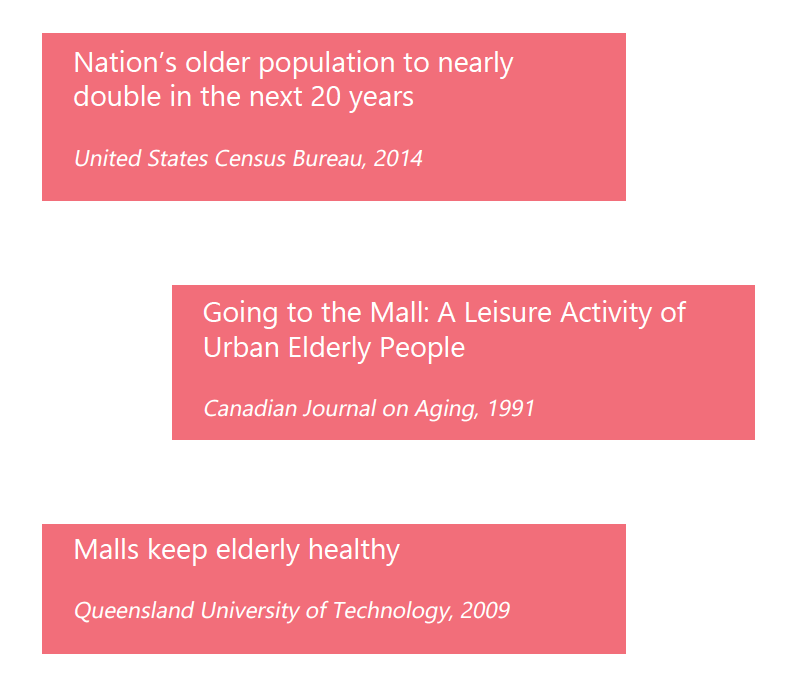
Elderly housing and retirement communities are traditionally a combination of sanatoriums and hotels specifically designed for populations above 65 years old. These communities are characterized by aggregated identical unit types; attention to accessibility through ramps, single-story residences, and other safety features; and amenities that promote physical and mental well-being. The project integrates elderly housing, which is often isolated and exists within its own independent bubbles, and the social services associated with it into a mall context to expand these social services to serve the larger community and merge the elderly with the outside population.
The elderly have been known to take advantage of malls as spaces for safe, climate-controlled, and accessible means of social interaction. The project recalls Victor Gruen’s original ideas for malls as a combination of social services and residential spaces with an emphasis on elderly mobility.
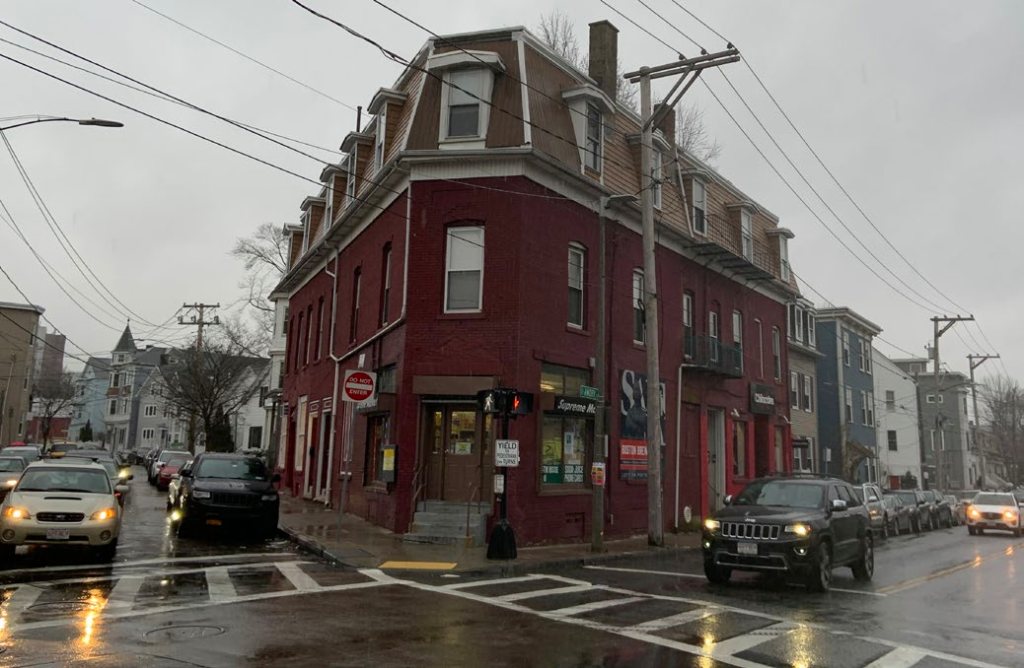
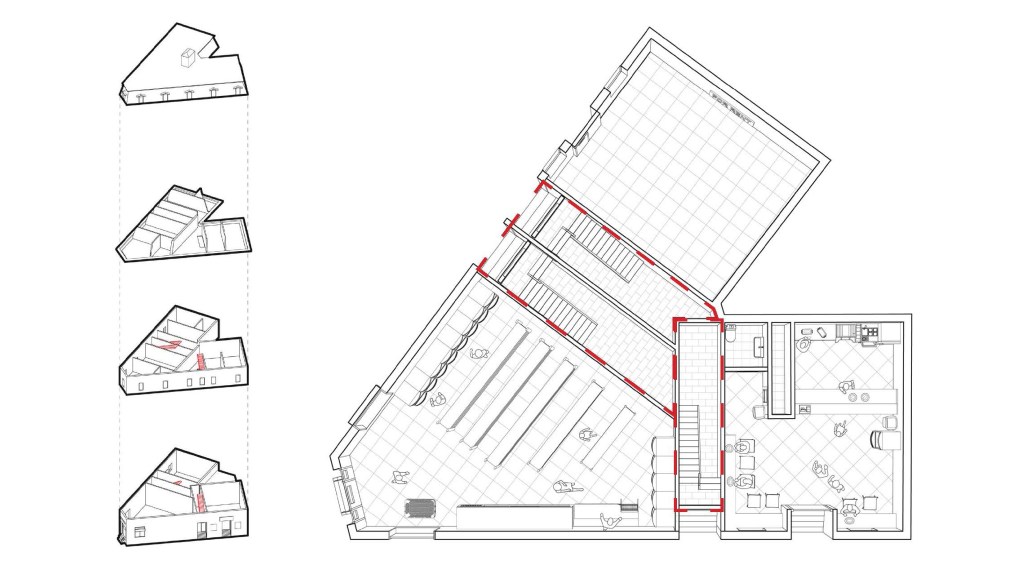
In this shophouse, two ground floor retail spaces are separated from the units above, with stairs located at separate entrances. This axon shows the vertical segregation between residential units and the stores below. The plan outlines how the stairwell planimetrically separates the retail spaces.
Left: 222-224 Amory St, Boston, MA 02130 and 147 Boylston St, Jamaica Plain, MA 02130
Middle: Segregated Stair Exploded Axonometric: Outlining apartments above and retail spaces below.
Right: Shophouse Ground Floor Plan Perspective
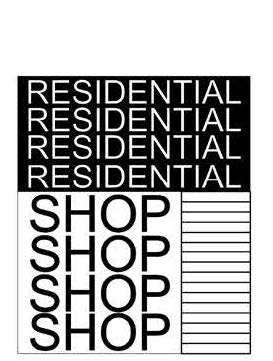
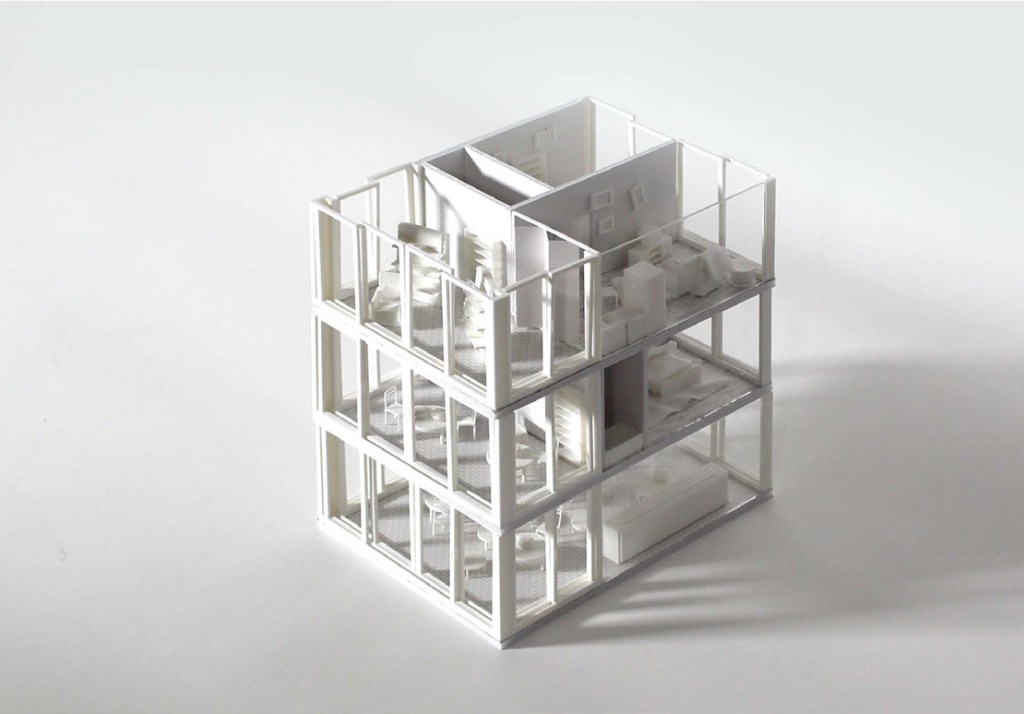
STACKED UNIT AND RETAIL PHYSICAL MODEL
The retail space occupies the lower level and two residential spaces occupy the upper floors. Each residential space has a porch that functions as a semi-public space.
PLANIMETRIC UNIT AND RETAIL PHYSICAL MODEL
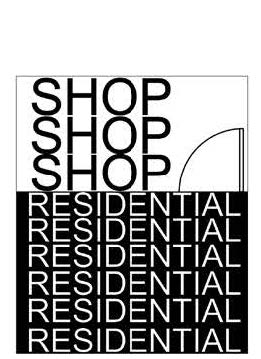
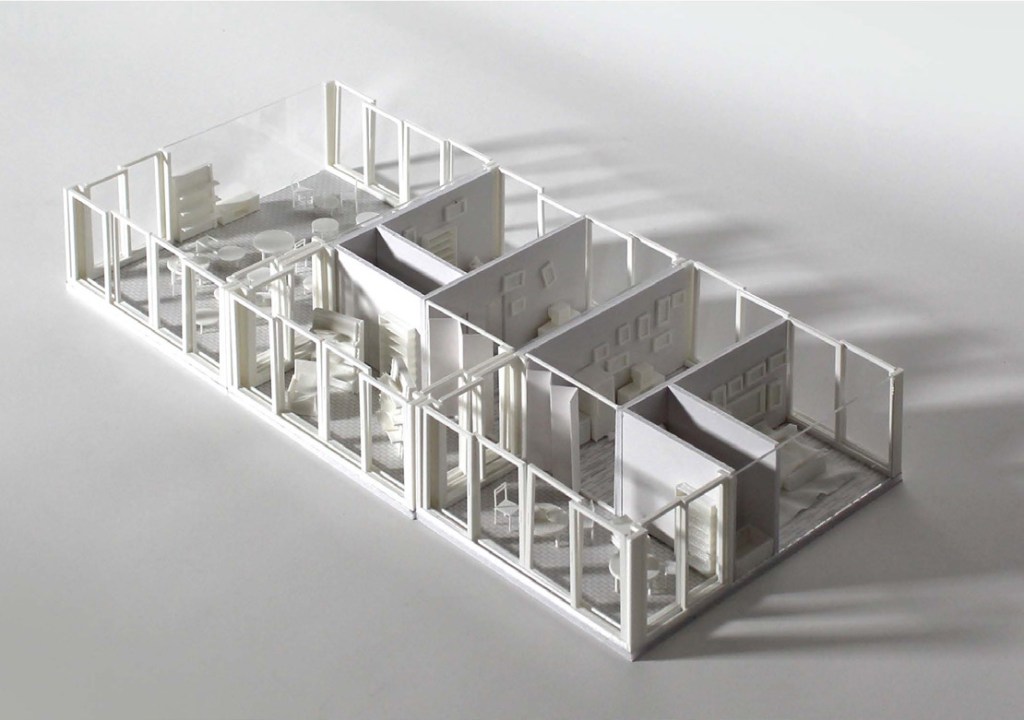
The sectional relationship of the unit and retail space are transformed to a planimetric relationship by replacing the verticality of the stair in section with a door in plan. The retail space now inhabits the porch and living spaces are located at the rear of the unit. The planimetric relationship increases accessibility to other shops and creates shared spaces across the porches and the retail space.
THE UNIT, THE CORRIDOR, AND THE BUILDING
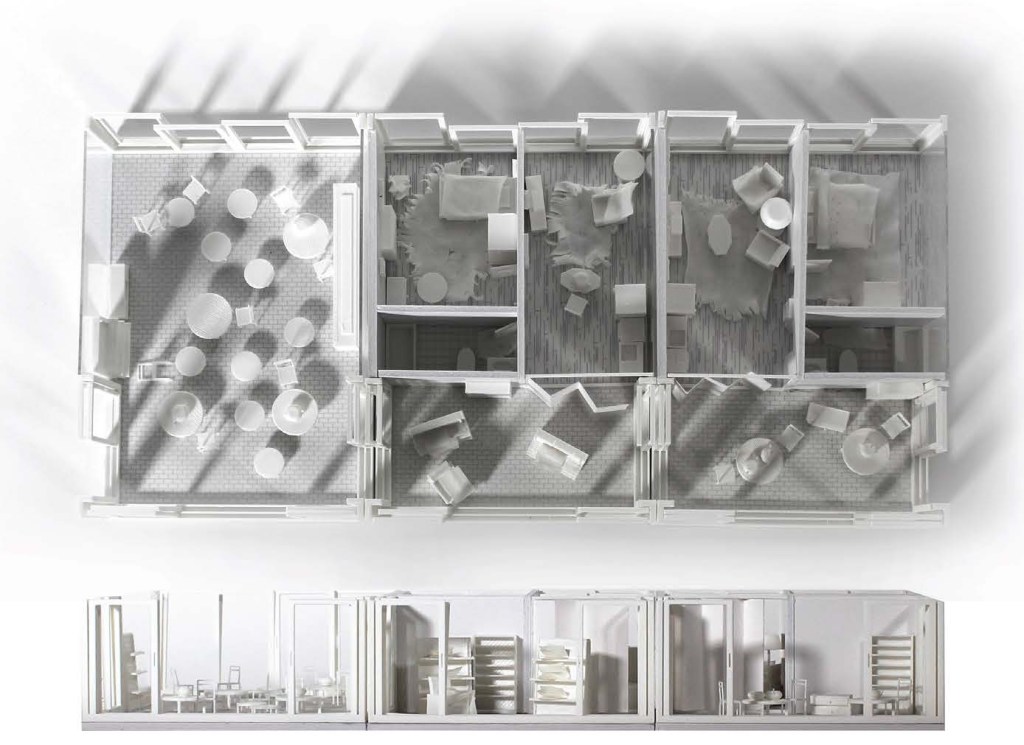
Model of Aggregated Units at Corridor Scale
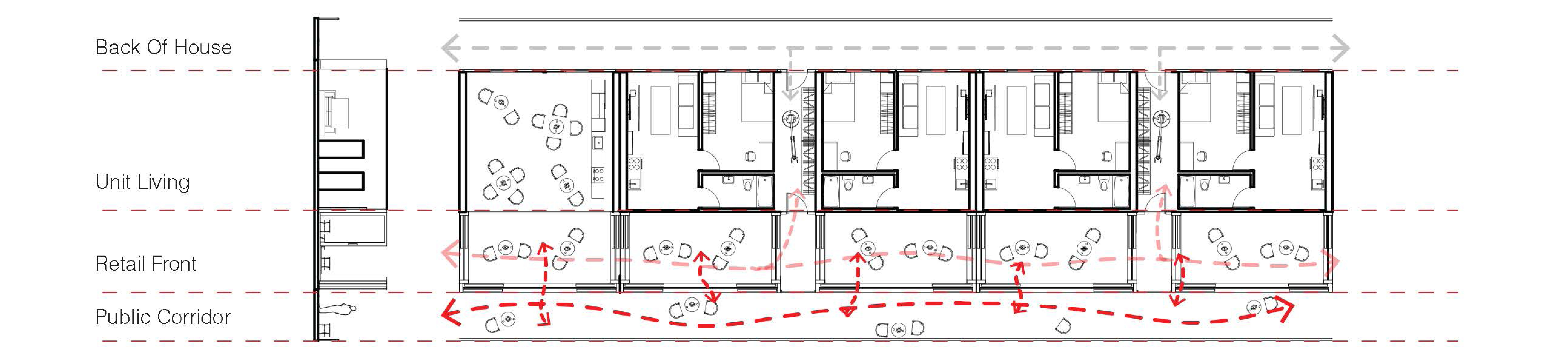
Corridor as Street
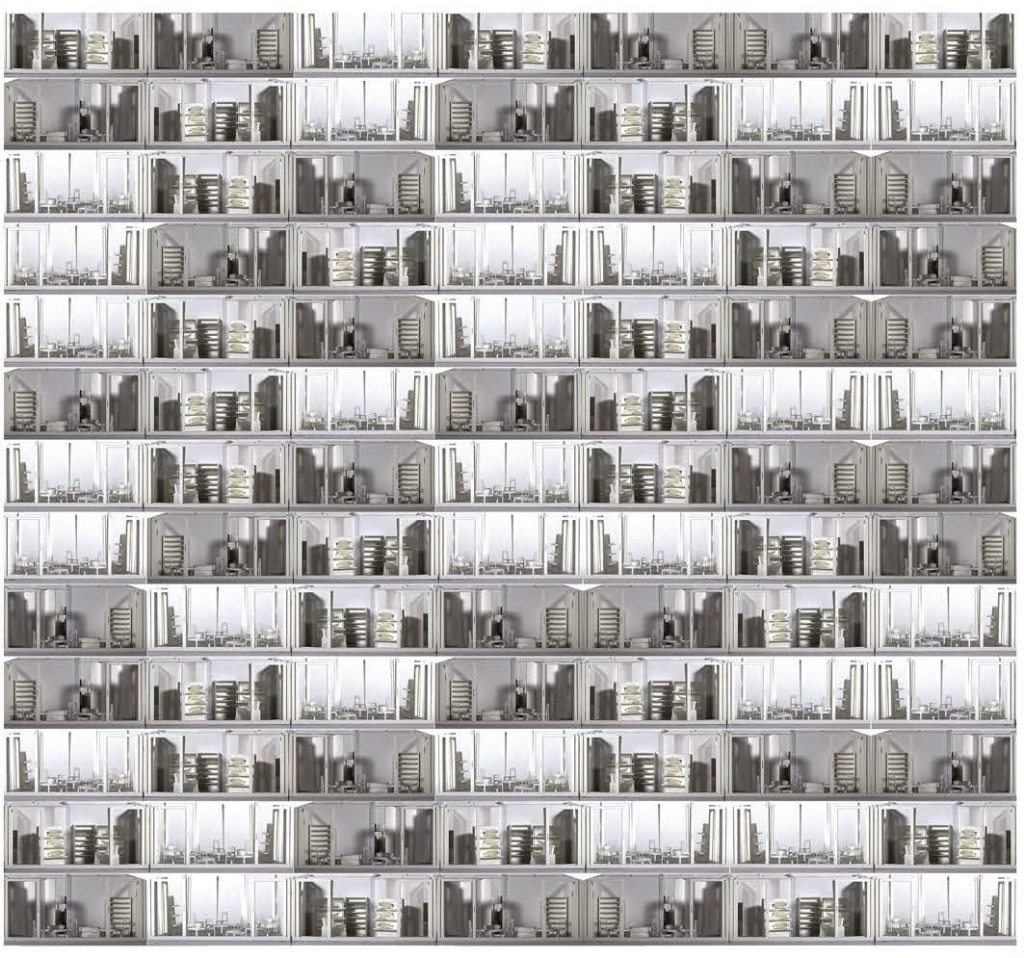
Stacked Corridors at Building Scale. A system of sliding doors creates degrees of privacy for elderly residents.
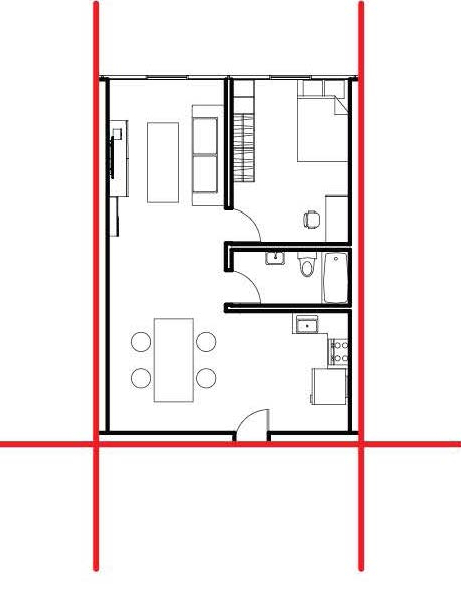
Enclosed Unit
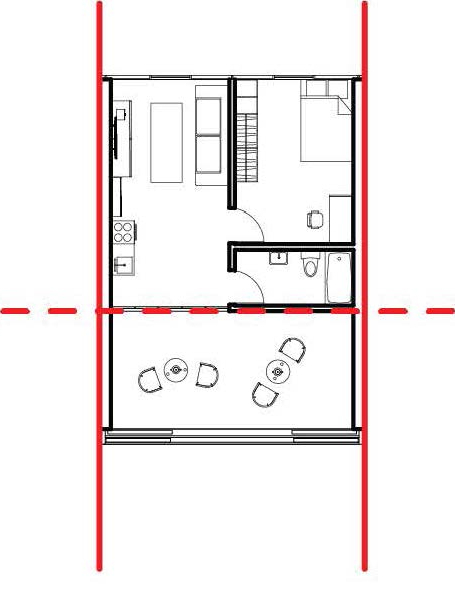
Unit Front Opened
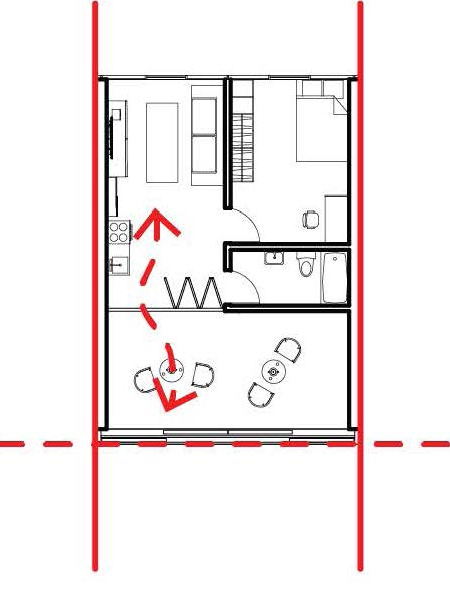
Unit Front Closed
The sliding doors shown allow a transition and gradient between retail fronts during the day and living at night. The retail storefront represents a space that encourages social interaction between the elderly and the general public of Stony Brook.
The porches of adjacent units can create shared spaces that grow in scale. The transverse direction of sliding doors allows units to form a bigger storefront together. In the end, a corridor or retail streetscape is formed.
PUBLIC ZONES: GREEN SPACES AND ANCHOR TENANTS
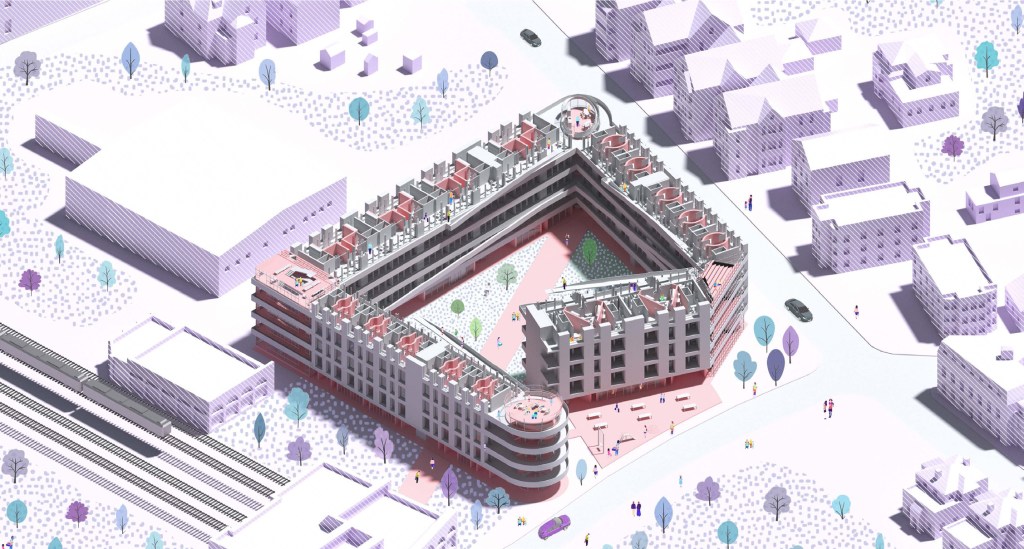
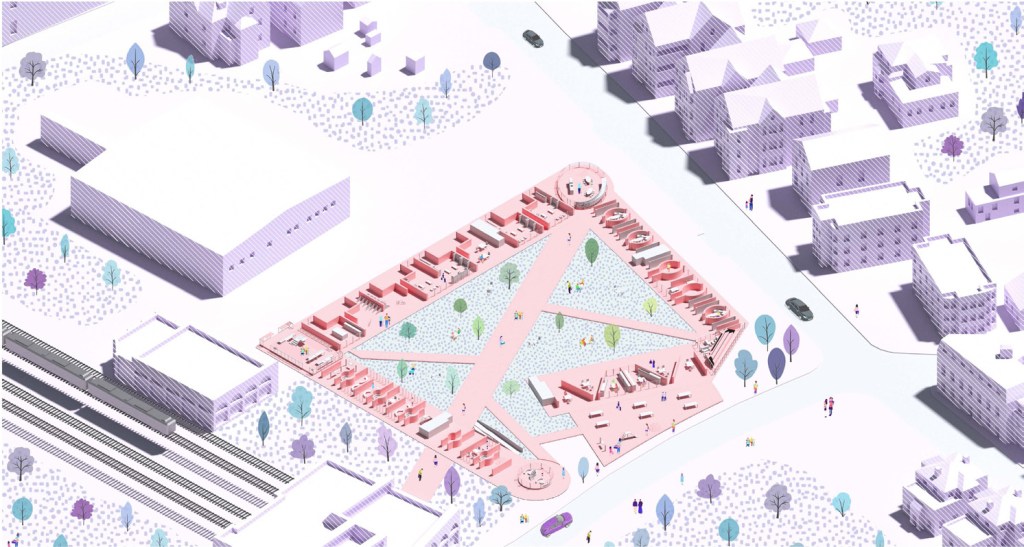
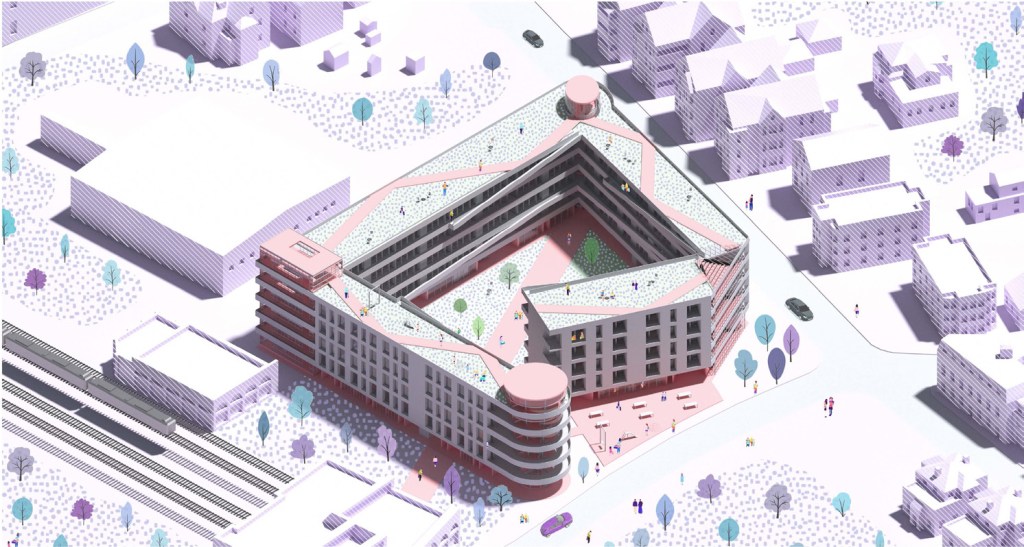
The rooftop terrace provides a community garden, play areas for the daycares, and other spaces that serve the community and anchor tenants. The shear walls continue to the ground floor, creating open, partitioned spaces for flexible use.
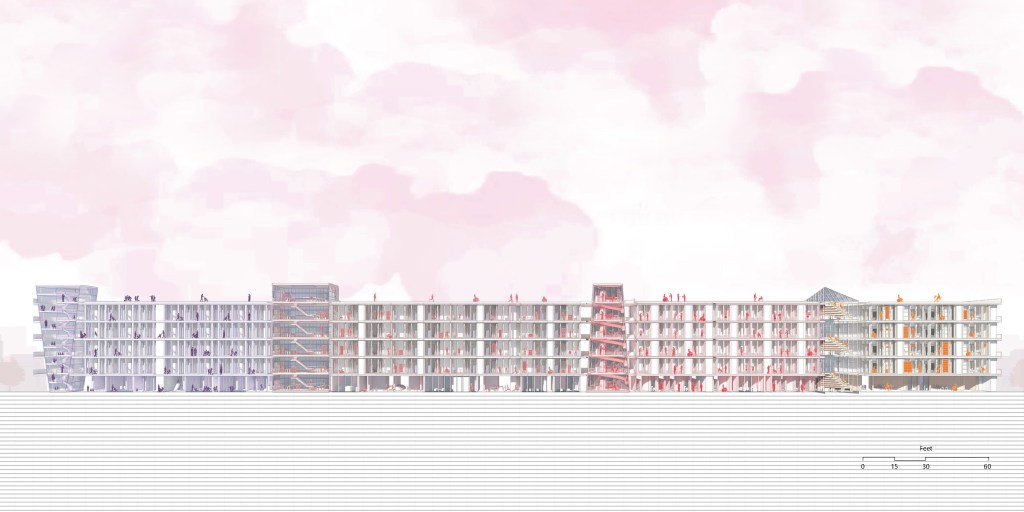
With reference to SANAA’s Gifu Apartment Complex, the project adopts a bar typology, to fit the linear, retail corridor plan. Wrapping the bar around the site encloses the inner courtyard, with communal anchor spaces defining the corners. From the plan, each side of the bar represents a retail or social district with a particular program of shear wall and an anchor tenant defining its ends.
SHEAR WALLS AS COMMUNAL SPACE
The shear walls between units are manipulated to allow retail programs to erode into units. There are four different types of retail erosion with distinct geometries: daycare, communal dining, boutique and media room. The shape of each room is determined by its programmatic function: round for the daycare for easier surveillance, oval for dining to ease conversation during meals, a rectangular space for the workshop as a more generic form for increased flexibility and shelf/storage placement, and triangular for the media room to create a distinct flat wall for a dominant viewing screen with the other two walls directing views to the screen.
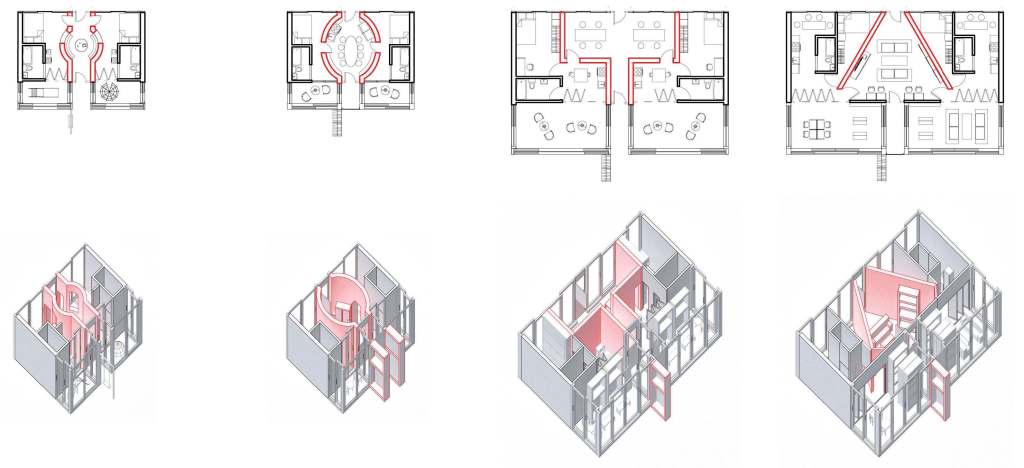
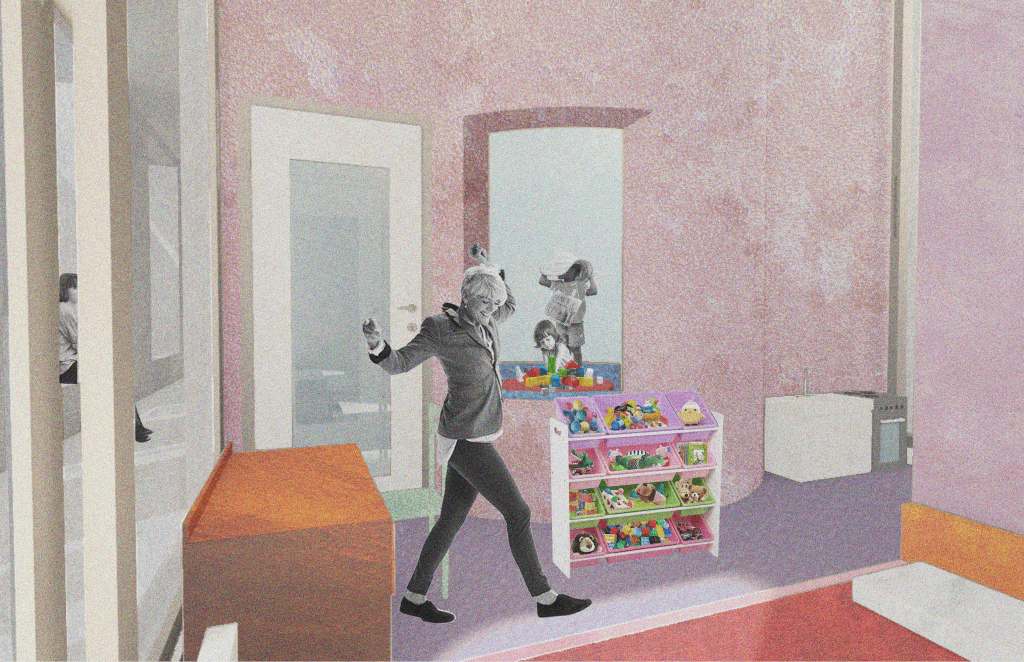
Daycare
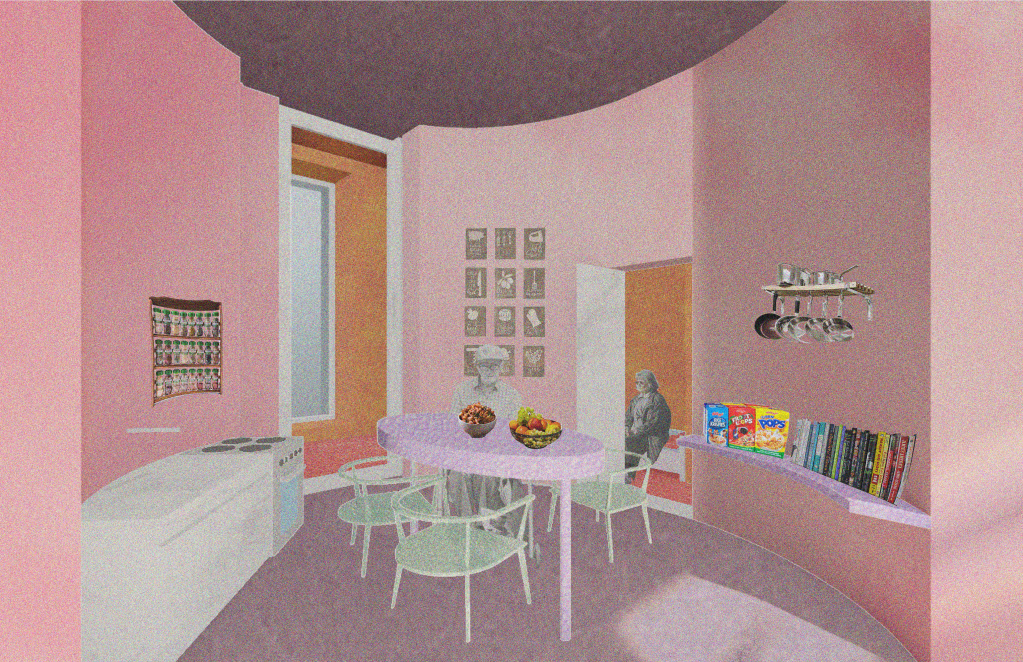
Communal Dining
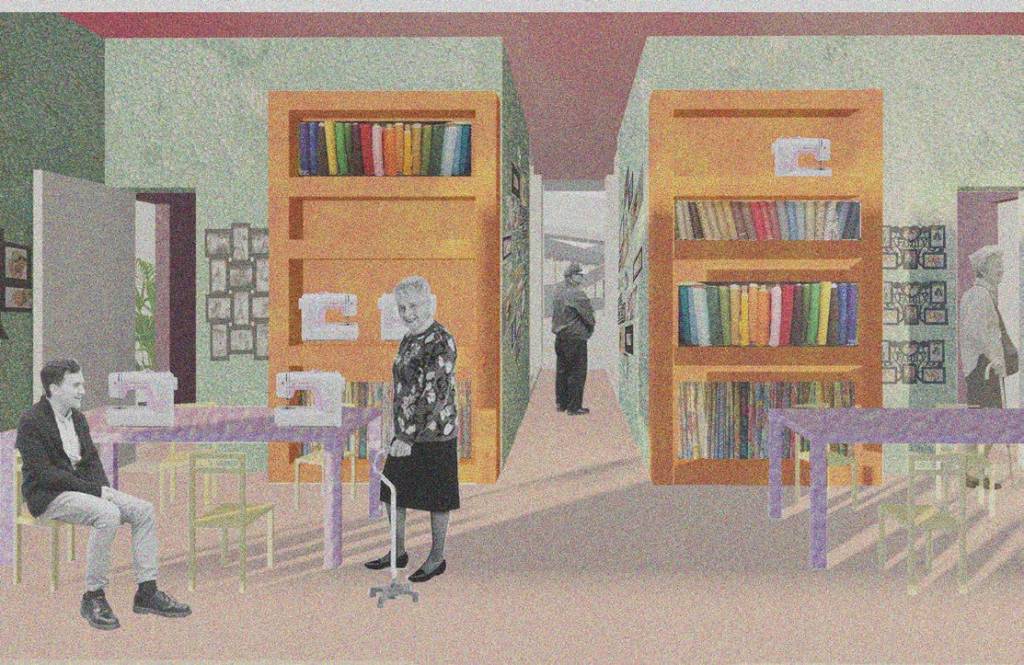
Boutique/ Workshop
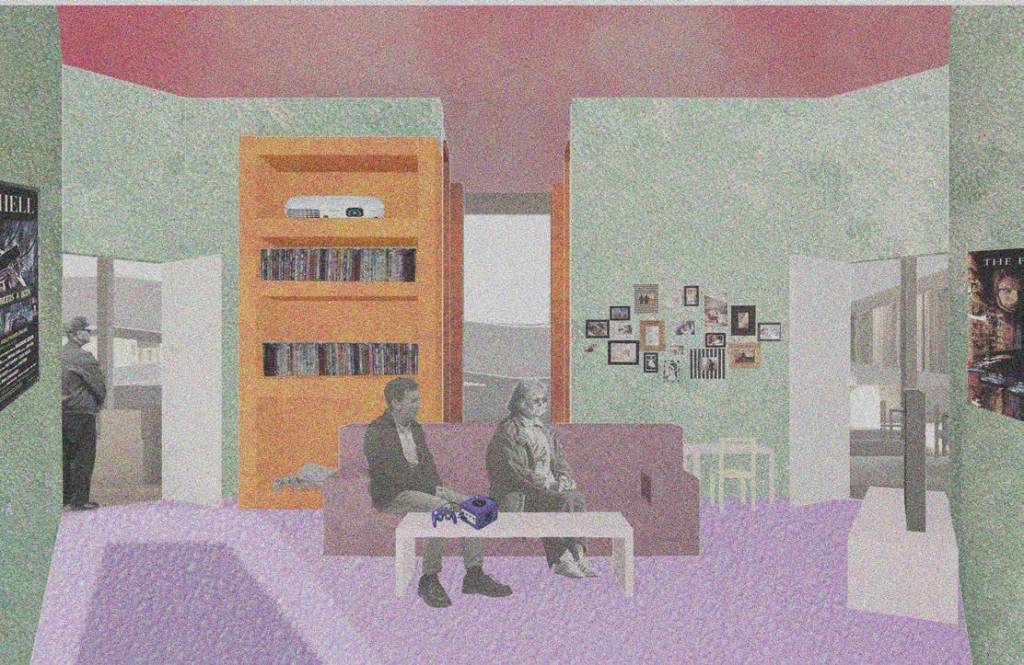
Library/ Media Room
PUBLIC PROGRAMS AS ANCHOR TENANTS
Extending beyond the unit and corridor scale, four anchor tenants provide larger social services for the community and define distinct districts of retail activity. Drawing from Victor Gruen’s plans for Welfare Island, the anchor tenants draw traffic to smaller shops and services within the project.
The anchor tenants adopt the figures of the smaller collective spaces as their large-scale counterparts. The home daycare becomes a community daycare center. The shared kitchen expands to become a communal kitchen for a whole floor. The workshop space becomes a community makerspace and marketplace. The smaller media rooms become a public library that provides access to different forms of media. The anchor tenants also possess sectional qualities that differ from those in the residential spaces including their own internal circulation and double-height spaces.
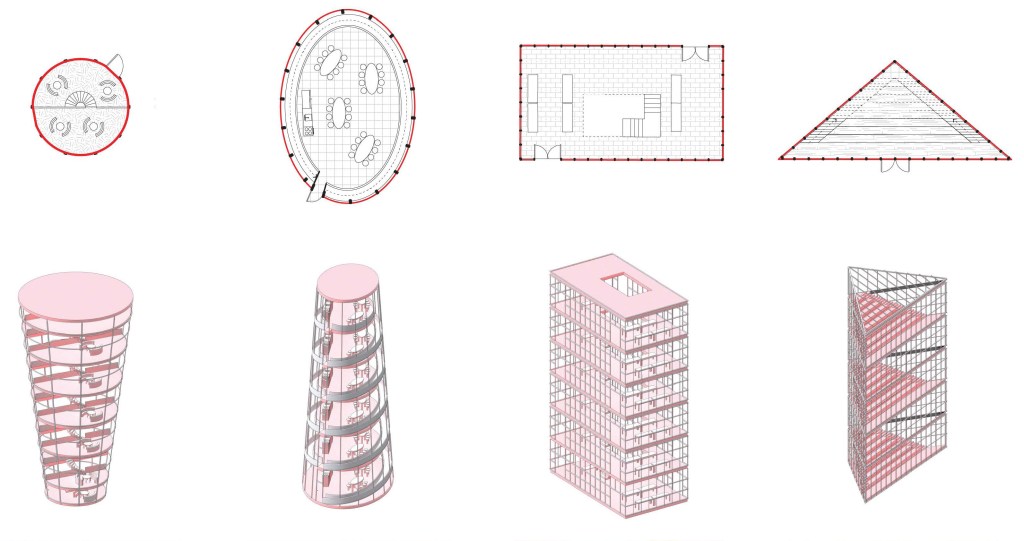
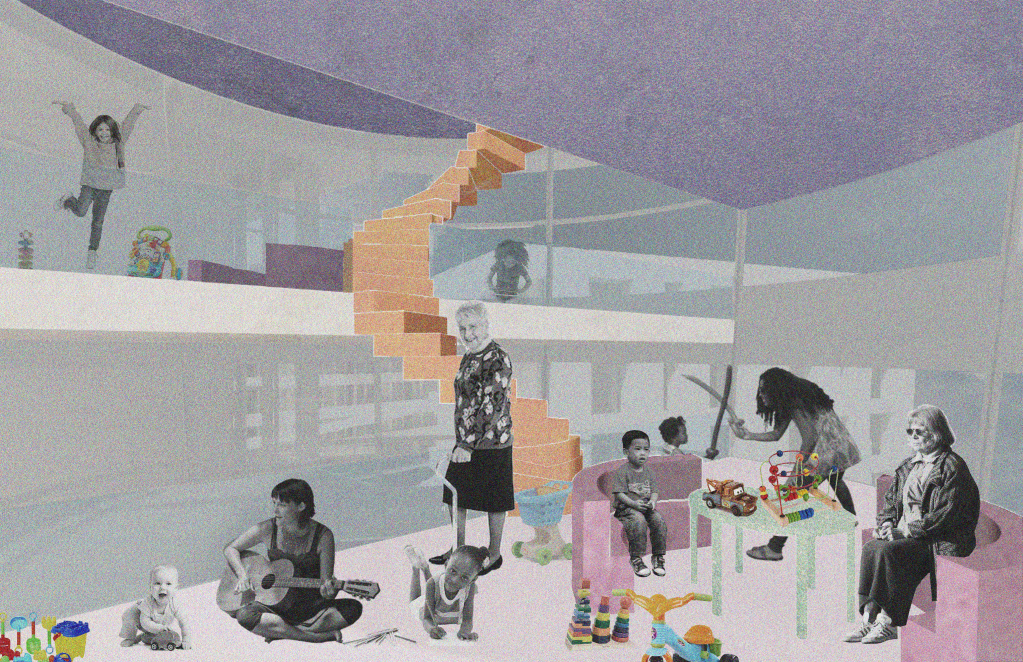
Daycare
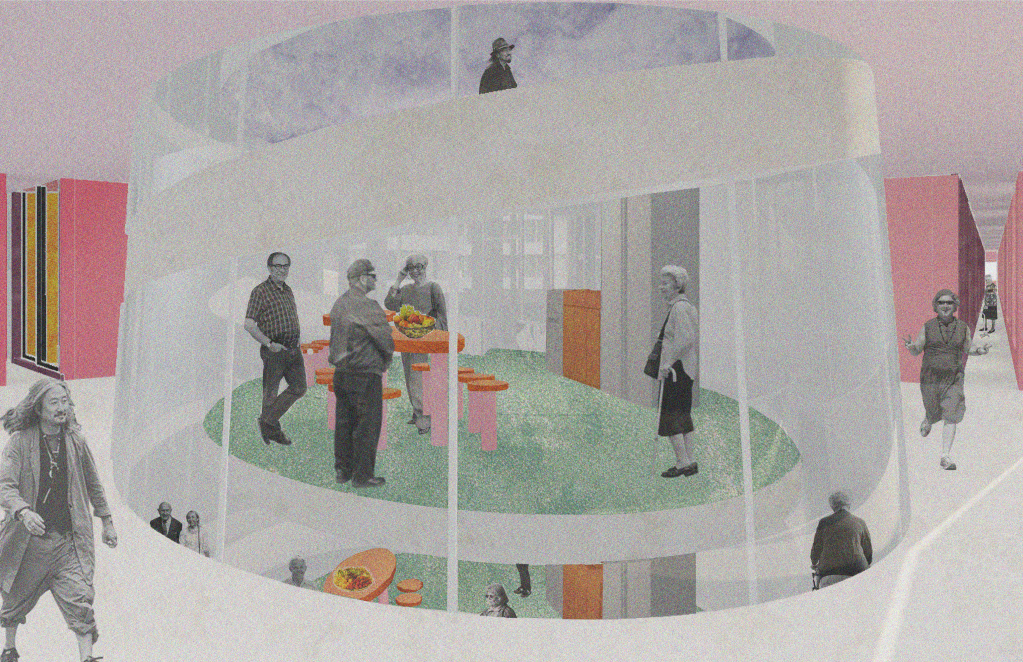
Communal Dining
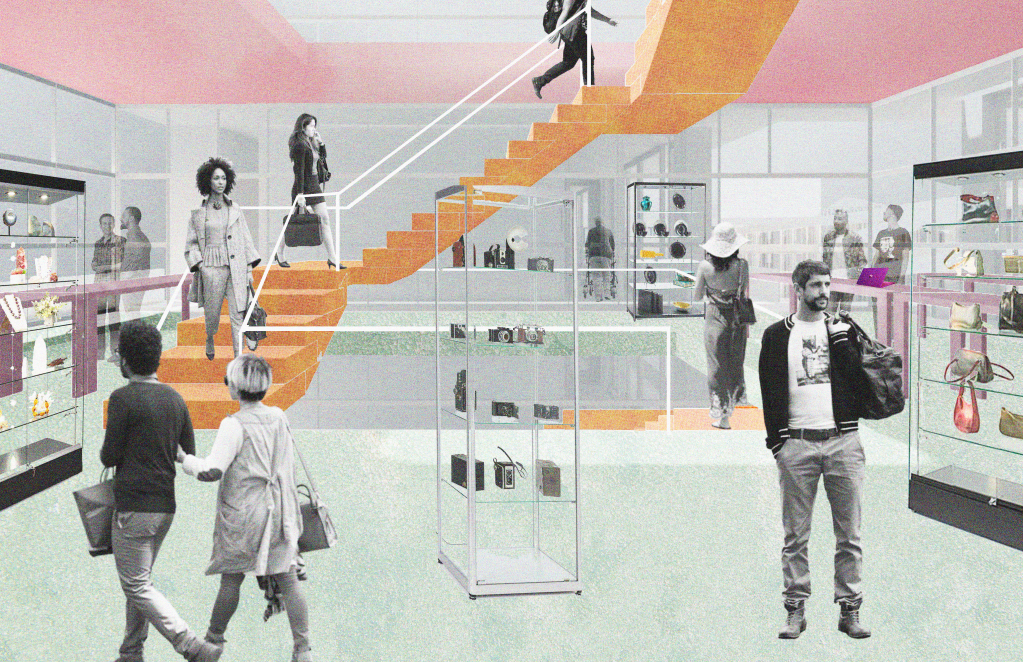
Boutique/ Workshop
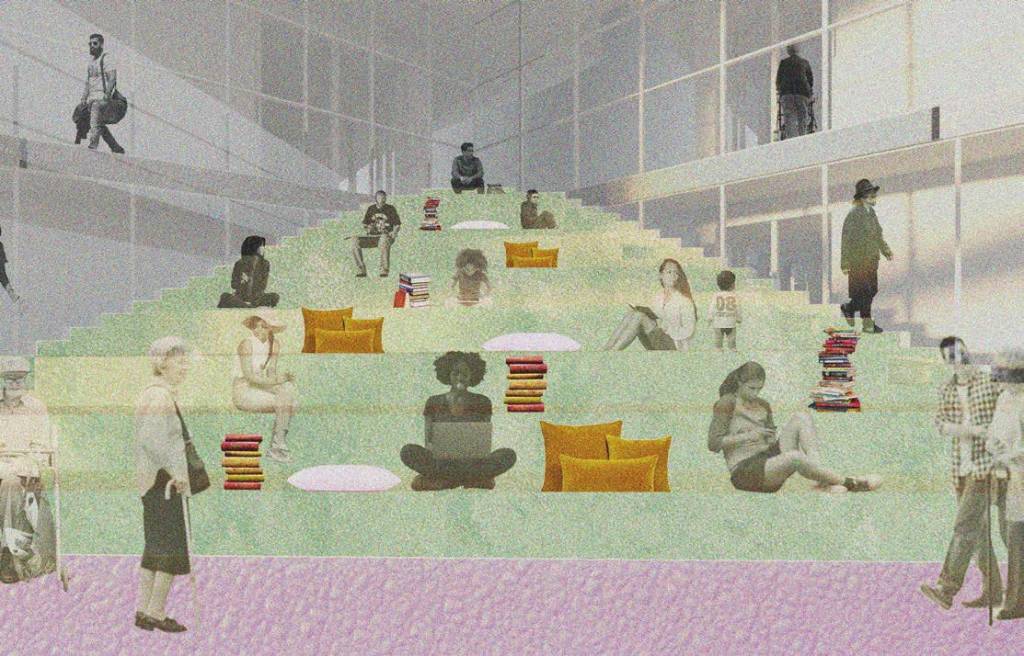
Library/ Media Room
TWO-FACED FACADE
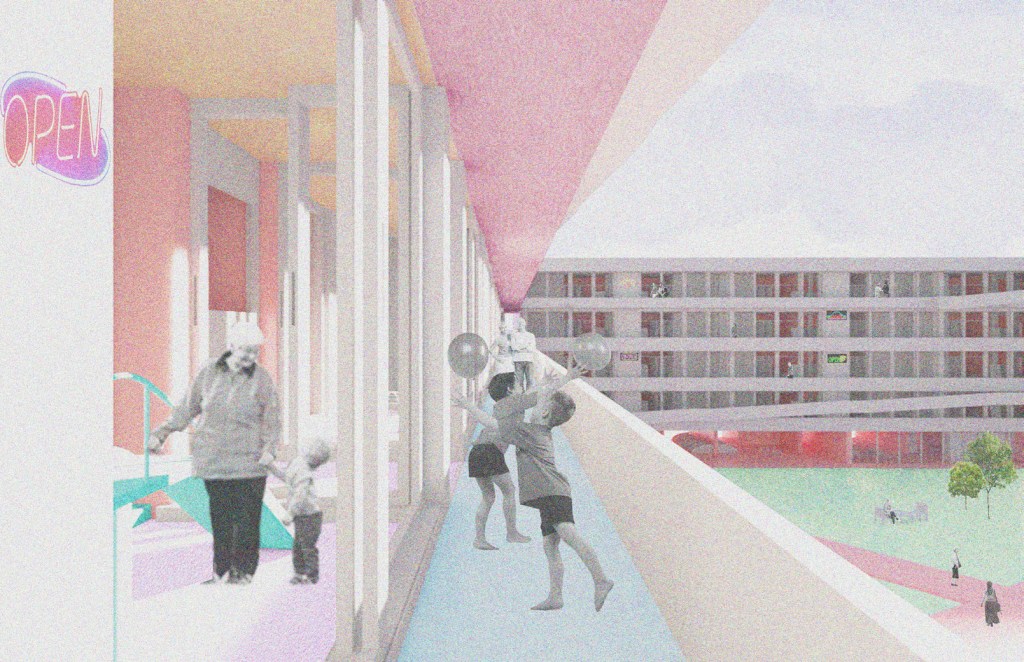
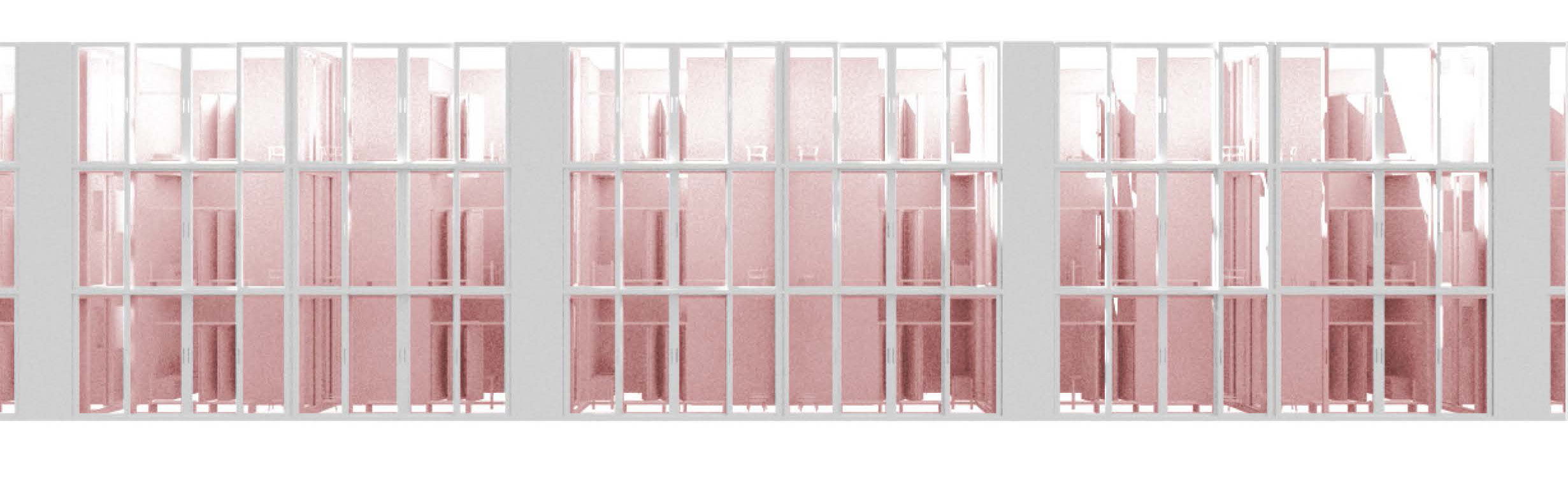
Retail Corridor
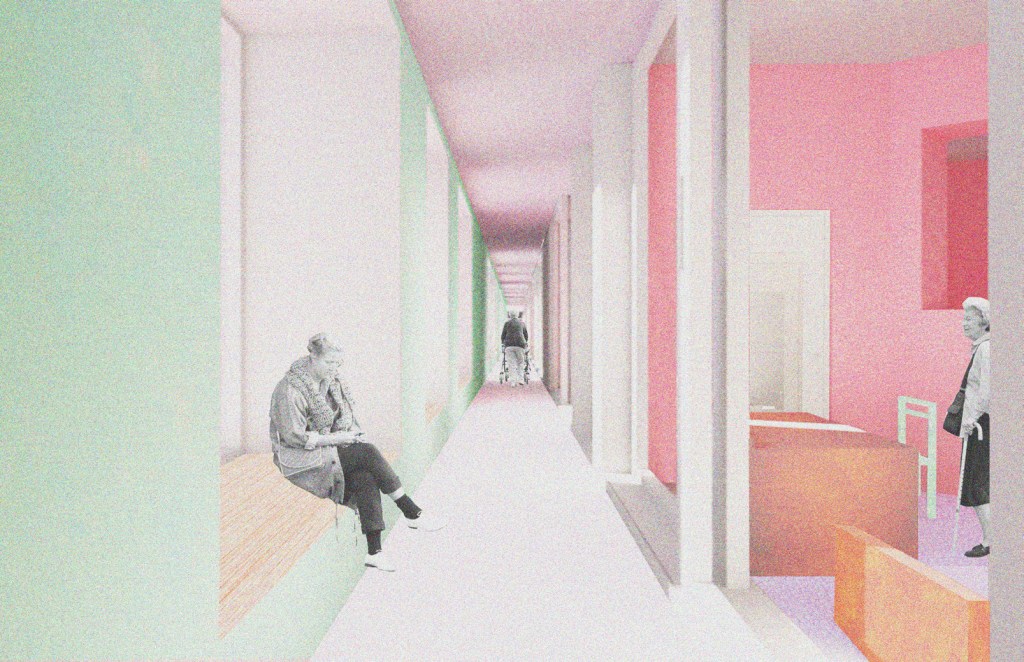
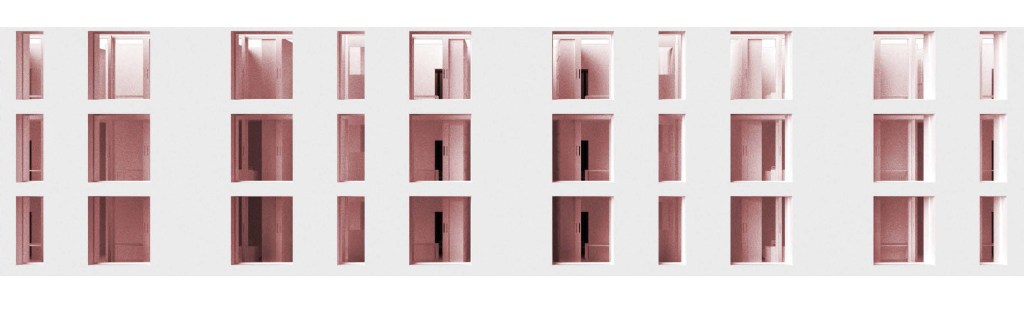
Residential Corridor
Because the project serves two communities—the elderly and the general public in Stony Brook—it has two fronts: one that is private and one that is public. These two sides are distinguished by the corridors that border the porches which serve as additional retail space, and the living and sleeping quarters of the elderly.
The retail corridor front is characterized by transparency and visual accessibility to display shelves within the unit porches. This corridor is identifiable by a flurry of activity during the daytime and it looks onto the courtyard. Ramps are another crucial feature that allow fluid and accessible shopping experiences for elderly demographics and the public.
The residential facades create a more opaque front that allow the elderly residents to have increased privacy and specific framed views of their homes and collective spaces. The quieter residential corridor has a thickened wall that becomes an alcove with a bench for members of the elderly community to stop, rest, and chat.
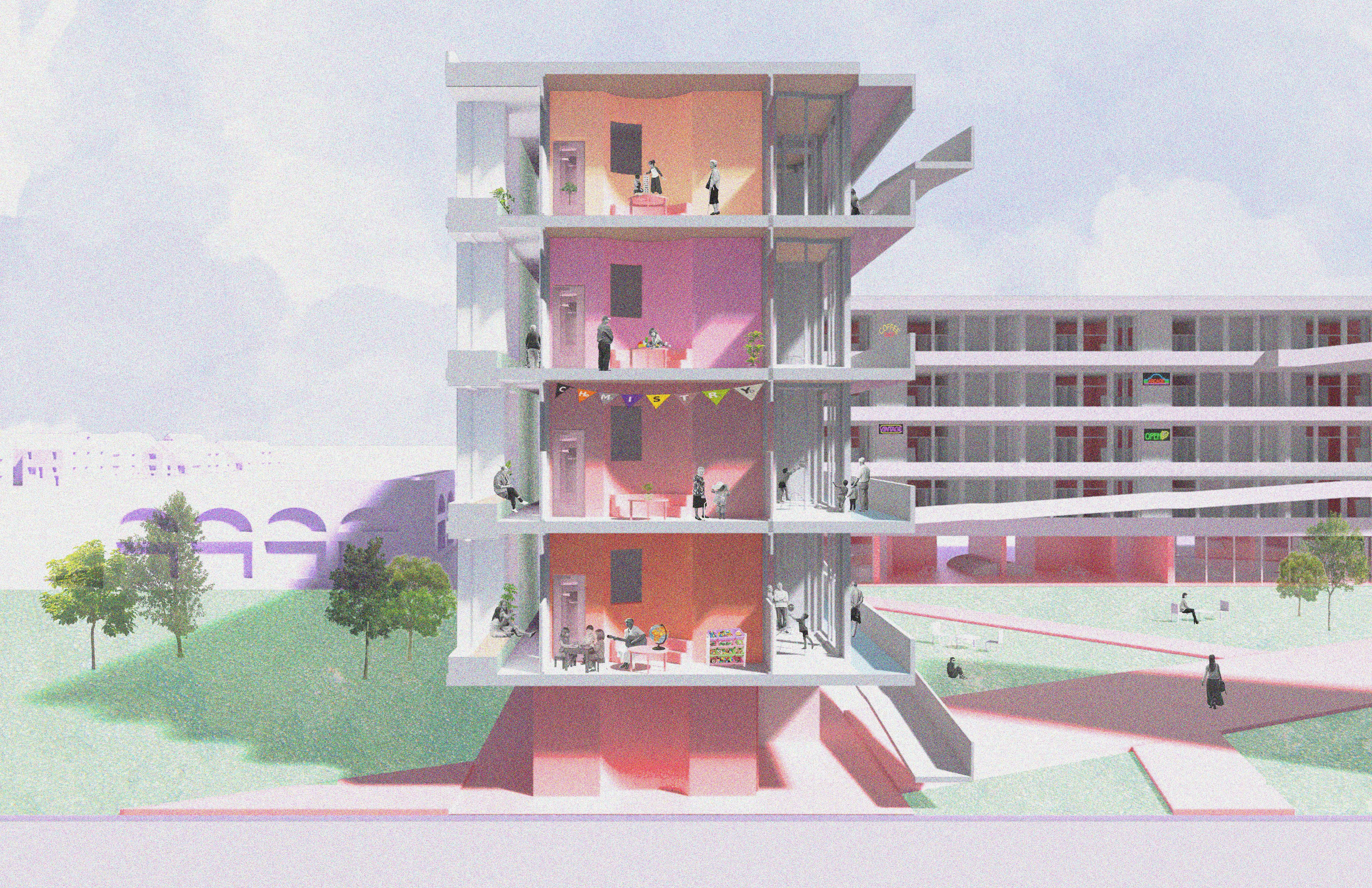
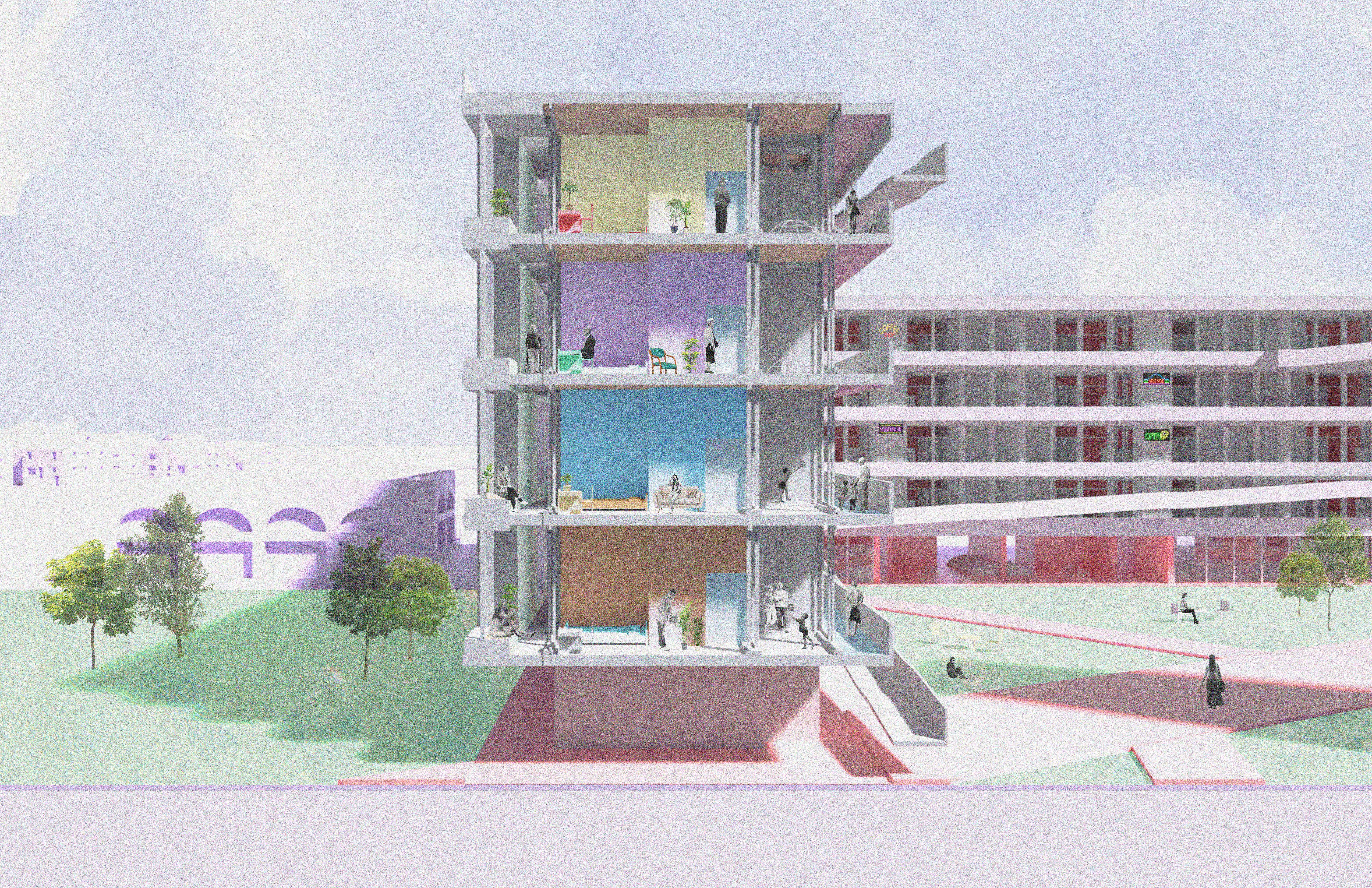
Transverse Section Within Shear Wall: Communal Space
The eroded retail and social spaces connect the public and private corridors.
Transverse Section Within Unit
The residential unit separates the public and private corridors.

 Tara Oluwafemi